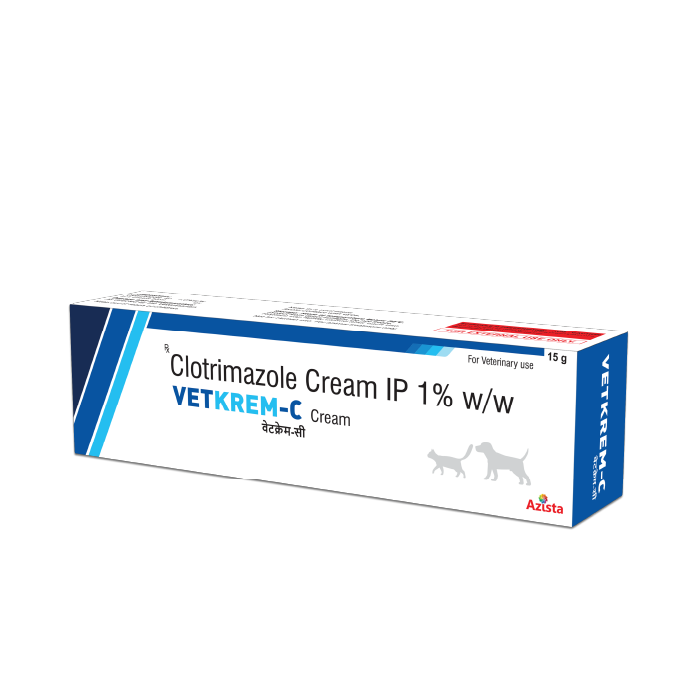
Vet Krem C Clotrimazole cream for dogs and cats – Effective antifungal treatment for skin infections, yeast, and ringworm by Azista Vet

Vet Krem- C 15 Mg

Clotrimazole Cream 1% w/w

15g Cream
(4.5 Rating's) (10 Review's)

Vet Krem C Clotrimazole Cream for Dogs & Cats – Antifungal Treatment by Azista Vet

Vet Krem-C 15 mg is a veterinary clotrimazole ointment containing clotrimazole, a triazole antifungal agent widely used for the treatment of fungal skin conditions. This clotrimazole antifungal cream works by inhibiting fungal cell membrane synthesis, effectively controlling fungal growth and infection. Clotrimazole cream for dogs and cats is commonly prescribed as a clotrimazole topical treatment for dogs and cats to manage superficial skin infections. It is effective against dermatophytosis (clotrimazole cream for ringworm), aspergillosis affecting the nasal passages in dogs, and candidiasis, making it suitable as clotrimazole for yeast infections in pets.

Used under veterinary supervision, clotrimazole for skin infections in dogs and cats provides targeted relief from fungal irritation, redness, and scaling. As a trusted option for clotrimazole for fungal infections, Vet Krem-C is often considered among the best antifungal creams for pets when used as directed by a veterinarian.

This formulation is intended for use in the following species:

  • Cats
  • Dogs

Depending on the formulation, condition, and species being treated, clotrimazole may also be prescribed for off-label (extra-label) use, which requires strict adherence to veterinary instructions.

Storage
  • Store the medication in its original container, protected from light, at room temperature.
  • Keep the cap tightly closed.
  • If your veterinarian or pharmacist has made a special (compounded) formulation for your pet, follow the storage recommendations and expiration date for the product.
  • Keep medication out of reach of children and pets.
Safety Advice
  • If you miss a dose, give it as soon as possible. If it's almost time for the next dose, skip the missed one and continue as scheduled. Never double the dose.
  • Your veterinarian may schedule a follow-up to confirm the infection is cleared or adjust treatment if needed. Monitor your pet for any unusual changes—if noticed, stop the medication and contact your vet.
  • If you suspect an overdose or adverse reaction, contact your veterinarian immediately. If unavailable, follow their instructions for emergency care.
  • Precautions & Monitoring for Clotrimazole Topical
  • Do NOT use in pets allergic to clotrimazole or azole antifungals.
  • Use with caution in pets that are pregnant, breeding, or have liver disease.

Contraindications

No known interactions, but always inform your veterinarian about any medications, supplements, or herbal treatments your pet is taking.

Monitoring

Your vet may schedule a follow-up to ensure the infection is cleared. Monitor your pet for any unusual changes—if noticed, stop the medication and consult your vet.

Potential Side Effects of Clotrimazole Topical

Common Side Effects

  • Redness, itching, or irritation at the application site.
  • Head shaking or head tilt if used near the ears.

Rare but Serious Reactions (Contact Your Vet Immediately)

  • Allergic reactions: swelling, rash, fever, or breathing issues.
  • Drug sensitivities may develop over time, even after initial doses.

Monitor your pet for any unusual signs. If noticed, stop the medication and consult your vet. This medication typically stops working within a few days.

Dosage Administration

Clotrimazole topical is available in liquid drops, ointment, and spray forms, all of which are applied directly to the skin.

Before application, clean the affected area as instructed by your veterinarian. To ensure effectiveness, prevent your pet from scratching or grooming the treated area for at least 30 minutes after application.

For safe handling

  • Wear gloves and wash your hands after applying the medication.
  • Avoid contact with the eyes.

Administer the medication for the full duration prescribed by your veterinarian, even if your pet seems to be improving.

While the medication typically starts working within a few days, visible improvements may take 1–2 weeks to appear.

Follow Us