Table of Contents
More from Blog
-
 Jul 30, 2026
Is Your Pet Sleeping More & Playing Less? Hidden Signs of Joint Discomfort -
 Jul 25, 2026
How Insects Affect Horse Comfort, Sleep & Daily Performance -
 Jul 20, 2026
Why Sudden Vomiting in Pets Should Never Be Ignored: Common Gastro Problems Explained -
 Jul 15, 2026
Is Your Pet Constantly Licking or Scratching? It Could Be a Fungal Infection -
 Jun 25, 2026
Dog Dandruff + Smelly Skin: Dry Skin, Yeast, or Infection? (What Actually Works)
Signs of Joint Pain in Dogs: Spot Early. Support Better Mobility
Sep 25, 2026
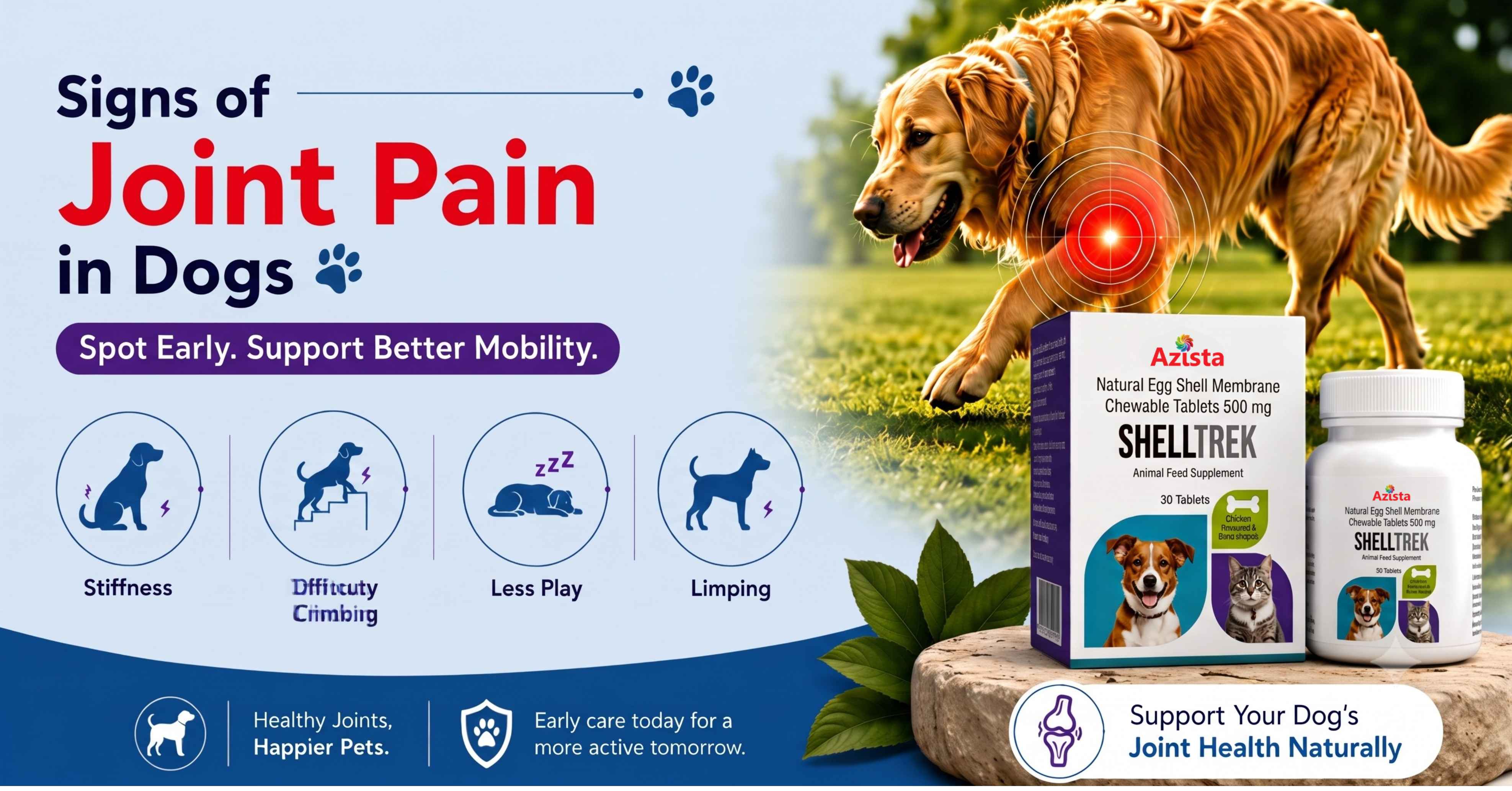
Dogs are naturally active companions. Whether they're chasing a ball, climbing stairs, jumping onto the couch, or heading out for a walk, healthy movement plays an important role in their daily lives.
However, dogs often hide discomfort surprisingly well. What may appear to be "slowing down with age" could actually be an early sign of joint or mobility issues.
Recognizing the signs of joint pain in dogs early can help pet owners seek veterinary guidance and take proactive steps to support long-term joint health and mobility, comfort, and quality of life.
7 Common Signs of Joint Pain in Dogs
Joint discomfort often develops gradually, making it easy to overlook the early warning signs.
1. Difficulty Getting Up After Rest
If your dog takes longer than usual to stand up after sleeping or resting, stiffness may be affecting their mobility.
Many dogs with joint discomfort appear stiff when they first get up but move more comfortably after a few minutes of activity.
2. Reluctance to Climb Stairs
Stairs place additional pressure on the hips, knees, and other joints.
A dog that hesitates, climbs more slowly, or avoids stairs altogether may be experiencing mobility challenges.
3. Trouble Jumping
Jumping onto furniture, into vehicles, or onto beds requires healthy joint function.
Dogs with joint discomfort may hesitate before jumping or stop attempting these activities altogether.
4. Reduced Interest in Walks and Play
A dog that once enjoyed long walks, fetch, or active play may become less enthusiastic or tire more quickly than usual.
Changes in activity levels are often one of the earliest signs noticed by pet owners.
5. Limping or Stiffness
Occasional limping, stiffness after exercise, or an unusual walking pattern can indicate that the joints are not functioning as comfortably as they should.
6. Slower Movement
Some dogs begin moving more cautiously, taking shorter strides or walking at a slower pace than before.
These changes can develop gradually over time.
7. Changes in Behaviour
Discomfort can sometimes affect behaviour.
A normally social and playful dog may become quieter, less interactive, or less willing to be touched around certain areas of the body.
What Causes Joint Problems in Dogs?
Joint and mobility concerns can occur at any age, although they are more common in older pets.
Several factors can contribute to dog joint problems, including
Age
As dogs grow older, natural wear and tear can affect joint function and flexibility.
Excess Body Weight
Additional weight places greater stress on weight-bearing joints, making weight management an important part of maintaining mobility.
Previous Injuries
Past injuries can influence movement patterns and contribute to future joint concerns.
Breed Predisposition
Large and giant breeds often place more mechanical stress on their joints because of their size and body structure.
Breeds such as Labrador Retrievers, German Shepherds, Golden Retrievers, and Rottweilers may be more prone to mobility concerns as they age, making proactive joint care especially important.
High Activity Levels
Working, sporting, and highly active dogs may place greater demands on their joints throughout their lives.
How Can You Support Your Dog's Mobility?
Supporting joint health involves a combination of daily care, nutrition, and regular monitoring.
Maintain a Healthy Weight
Maintaining an appropriate body condition helps reduce unnecessary stress on the joints.
Encourage Low-Impact Exercise
Regular walks and controlled exercise help maintain muscle strength and support mobility.
Activity should be tailored to your dog's age, fitness level, and overall health.
Provide Comfortable Rest Areas
Supportive bedding and easy access to resting areas can help improve comfort, especially for senior pets.
Schedule Regular Veterinary Check-Ups
Routine veterinary visits can help identify mobility concerns early and provide guidance on appropriate management strategies.
Consider Nutritional Joint Support
Many pet owners choose nutritional supplements as part of a broader mobility-support routine.
Joint-support products are commonly used alongside exercise, weight management, and veterinary care.
Can Joint Supplements Help Support Mobility?
Joint supplements are designed to provide nutritional ingredients associated with healthy cartilage, connective tissues, and joint function.
One ingredient increasingly used in mobility-support products is Natural Eggshell Membrane (NEM), a naturally occurring source of collagen, glucosamine, chondroitin, hyaluronic acid, and other proteins that are found in connective tissues.
Research has explored the role of eggshell membrane in supporting mobility and joint function in dogs as part of a broader joint-care approach. (Ragetly et al., 2025)
As with any supplement, suitability depends on the individual pet and should be discussed with a veterinarian.
How ShellTrek Supports Joint and Bone Health
Supporting mobility isn't just about the joints; strong bones and healthy connective tissues also play an important role.
ShellTrek is a chewable nutritional supplement for dogs and cats that combines two key ingredients:
Natural Eggshell Membrane
Natural Eggshell Membrane naturally contains
- Collagen
- Glucosamine
- Chondroitin
- Hyaluronic Acid
These naturally occurring compounds are commonly associated with cartilage, connective tissue, and joint structure.
Eggshell Calcium
Eggshell Calcium provides a highly bioavailable source of calcium that helps support healthy bones, teeth, and normal muscle function.
Dual Support for Mobility
By combining Natural Eggshell Membrane and Eggshell Calcium, ShellTrek provides nutritional support for both joint and bone health.
The chicken-flavoured, bone-shaped chewable tablet makes daily supplementation convenient and enjoyable for pets, helping support active lifestyles in aging, large-breed, and highly active dogs.
When Should You Visit a Veterinarian?
While occasional stiffness can occur, veterinary evaluation is important if your dog experiences
- Persistent limping
- Difficulty standing
- Swollen joints
- Sudden mobility changes
- Significant pain or discomfort
- Symptoms following an injury
- Reduced ability to perform normal daily activities
A veterinarian can identify the underlying cause and recommend an appropriate management plan.
Conclusion
Early signs of joint pain in dogs, such as stiffness, difficulty getting up, reluctance to jump, or avoiding stairs, should not be ignored. Along with regular exercise, weight management, balanced nutrition, and veterinary care, nutritional support can play an important role in maintaining mobility and comfort.
ShellTrek combines Natural Eggshell Membrane and Eggshell Calcium to provide dual-action support for joint flexibility, connective tissue health, and bone strength, helping dogs and cats stay active and enjoy a healthy, mobile lifestyle.
Support Your Pet’s Joint Health
Explore ShellTrek for nutritional joint and bone support for dogs and cats.
References
Ragetly, G. R., Martins, Â., Ober, C. A., Boiocchi, S., & Nicolas, C. S. (2025). Efficacy of a joint supplement containing eggshell membrane among other ingredients to improve the mobility of dogs with osteoarthritis: A multicenter double-blind randomized placebo-controlled study. Frontiers in Veterinary Science, 12, 1561793. https://doi.org/10.3389/fvets.2025.1561793
FAQs
- What are the first signs of joint pain in dogs?
Common early signs include stiffness after rest, difficulty getting up, reluctance to climb stairs, reduced activity, limping, and changes in walking.
- Can younger dogs develop joint problems?
Yes. Although joint issues are more common in older pets, younger dogs may also experience mobility concerns due to genetics, injuries, growth-related conditions, or high activity levels.
- Are joint supplements good for dogs?
Joint supplements may be beneficial for dogs as part of a broader mobility support routine. The most suitable option depends on your dog's age, lifestyle, and individual needs, so veterinary guidance is recommended.
- Is eggshell membrane used in dog joint supplements?
Yes. Natural Eggshell Membrane is used in many mobility-support products because it naturally contains collagen, glucosamine, chondroitin, and hyaluronic acid.
- How does ShellTrek support mobility?
ShellTrek combines Natural Eggshell Membrane and Eggshell Calcium to provide nutritional support for joint flexibility, connective tissue health, and bone strength as part of a comprehensive mobility-care routine.