Table of Contents
More from Blog
-
 Sep 28, 2026
Pet Wound Care: How to Care for Minor Wounds in Dogs and Cats -
 Sep 25, 2026
Signs of Joint Pain in Dogs: Spot Early. Support Better Mobility -
 Jul 30, 2026
Is Your Pet Sleeping More & Playing Less? Hidden Signs of Joint Discomfort -
 Jul 25, 2026
How Insects Affect Horse Comfort, Sleep & Daily Performance -
 Jul 20, 2026
Why Sudden Vomiting in Pets Should Never Be Ignored: Common Gastro Problems Explained
Yeast vs Bacterial Ear Infection in Dogs: Key Differences (Smell, Colour, Itch)
Jun 01, 2026
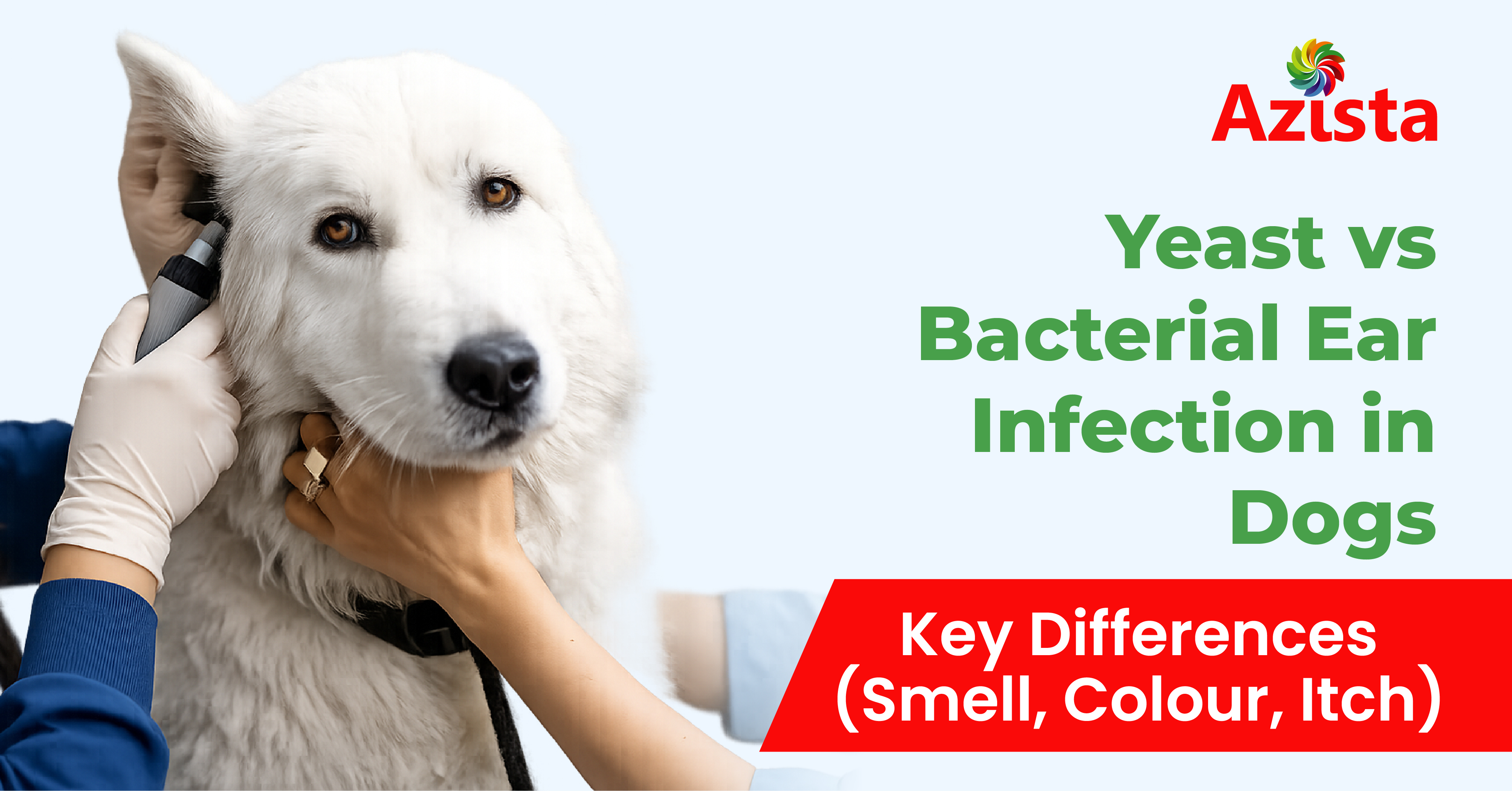
Is your dog scratching its ears, shaking its head or showing discharge? These signs may indicate an ear infection - but identifying whether it's yeast or bacterial is crucial for proper treatment.
This guide explains the difference between yeast vs bacterial ear infections in dogs, including smell, discharge colour, itching patterns and when to visit a vet.
Yeast ear infections in dogs typically cause a strong, musty smell with dark brown or black discharge and intense itching, while bacterial infections often produce yellow or green discharge, redness, swelling and pain. A vet examination or ear swab test is needed for accurate diagnosis.
Disease Overview - Ear Infections in Dogs
Ear infections (otitis externa) are common in dogs, especially those with:
- Floppy ears
- Allergies
- Excess moisture in ears
Common types
- Yeast infections (fungal)
- Bacterial infections
- Ear mites (parasites)
Yeast vs Bacterial Ear Infection in Dogs
Key Differences at a Glance
| Feature | Yeast Infection | Bacterial Infection |
|---|---|---|
| Smell | Strong, musty, “cheesy” | Mild to foul |
| Discharge colour | Dark brown / black | Yellow / green |
| Itching | Severe | Moderate to severe |
| Redness | Present | More intense |
| Pain | Mild to moderate | Often painful |
Yeast Ear Infection in Dogs
Symptoms
- Strong odour (often described as “bread-like”)
- Dark brown or black discharge
- Excessive scratching
- Ear licking or rubbing
Causes
- Moisture buildup
- Allergies
- Weak immune response
Bacterial Ear Infection in Dogs
Symptoms
- Yellow or green discharge
- Redness and swelling
- Pain when touched
- Head shaking
Causes
- Secondary infection (after yeast or allergies)
- Injury or irritation
- Poor ear hygiene
Dog Ear Infection vs Ear Mites
Key differences
- Ear mites cause intense itching and dry, crumbly black debris
- Often affect both ears
- More common in puppies
Proper diagnosis is essential, as treatment differs.
Diagnostic Tests - How Vets Confirm Infection
Dog ear swab test
- A sample is taken from the ear
- Examined under a microscope
- Identifies yeast, bacteria or mites
This helps determine the correct treatment.
Treatment Overview
General approaches
- Yeast infections: Antifungal ear drops
- Bacterial infections: Antibiotic treatment
- Mixed infections: Combination therapy
Early treatment helps prevent complications and recurrence.
For professional veterinary evaluation and treatment support, consulting Azista Vet ensures accurate diagnosis and personalised care.
How Ear Infections Affect Dogs
Mechanism (high-level)
- Infection disrupts ear canal balance
- Leads to inflammation and discharge
- Causes discomfort, itching and pain
Without treatment, infections can worsen and spread deeper.
How to Clean Dog Ears Safely
Basic steps
- Use vet-recommended ear cleaner
- Gently wipe outer ear
- Avoid inserting deep objects
- Clean regularly but not excessively
Recurring Ear Infections in Dogs
Why infections come back
- Underlying allergies
- Poor ear hygiene
- Incomplete treatment
Managing root causes is key to prevention.
When to Visit a Vet
Seek veterinary care if you notice:
- Persistent bad smell
- Discharge (black, yellow, or green)
- Excessive scratching
- Pain or swelling
- Recurring infections
Common User Questions
What does a yeast ear infection smell like in dogs?
It usually has a strong, musty or “cheesy” odour.
What does black discharge in dog ears mean?
It often indicates a yeast infection or ear mites.
Can I treat my dog's ear infection at home?
Mild cases may improve with cleaning, but proper diagnosis is important before treatment.
Safety and Usage Overview
- Avoid self-medicating without diagnosis
- Use only vet-approved treatments
- Complete full treatment course
- Monitor for recurrence
Disclaimer: This content is for educational purposes only and does not replace veterinary advice.
FAQ's
-
How can I tell if my dog has a yeast or bacterial ear infection?
Yeast infections usually have dark discharge and strong odour, while bacterial infections show yellow discharge and more pain. -
What causes ear infections in dogs?
Moisture, allergies, bacteria and yeast overgrowth are common causes. -
Are dog ear infections serious?
They can become serious if untreated, leading to pain and complications. -
How often should I clean my dog's ears?
Depends on breed and condition - usually once a week or as advised by a vet. -
Can ear infections come back in dogs?
Yes, especially if underlying causes are not treated.
Key Takeaways
- Yeast and bacterial ear infections have different signs
- Smell and discharge colour are key indicators
- Accurate diagnosis requires a vet examination
- Early treatment prevents complications
- Regular ear care helps reduce risk
Conclusion
Understanding the difference between yeast vs bacterial ear infections in dogs can help you recognise symptoms early and seek the right care. While signs like smell, discharge colour and itching offer useful clues, proper diagnosis through a vet examination is essential for effective treatment.
For accurate diagnosis, advanced testing, and personalised veterinary care, consulting Azista Vet can help ensure your dog receives the right treatment and long-term ear health support.