Table of Contents
More from Blog
-
 Sep 28, 2026
Pet Wound Care: How to Care for Minor Wounds in Dogs and Cats -
 Sep 25, 2026
Signs of Joint Pain in Dogs: Spot Early. Support Better Mobility -
 Jul 30, 2026
Is Your Pet Sleeping More & Playing Less? Hidden Signs of Joint Discomfort -
 Jul 25, 2026
How Insects Affect Horse Comfort, Sleep & Daily Performance -
 Jul 20, 2026
Why Sudden Vomiting in Pets Should Never Be Ignored: Common Gastro Problems Explained
How to Clean a Dog’s Ears Safely: Step-by-Step + How Often (Vet-Style Routine)
Jun 08, 2026
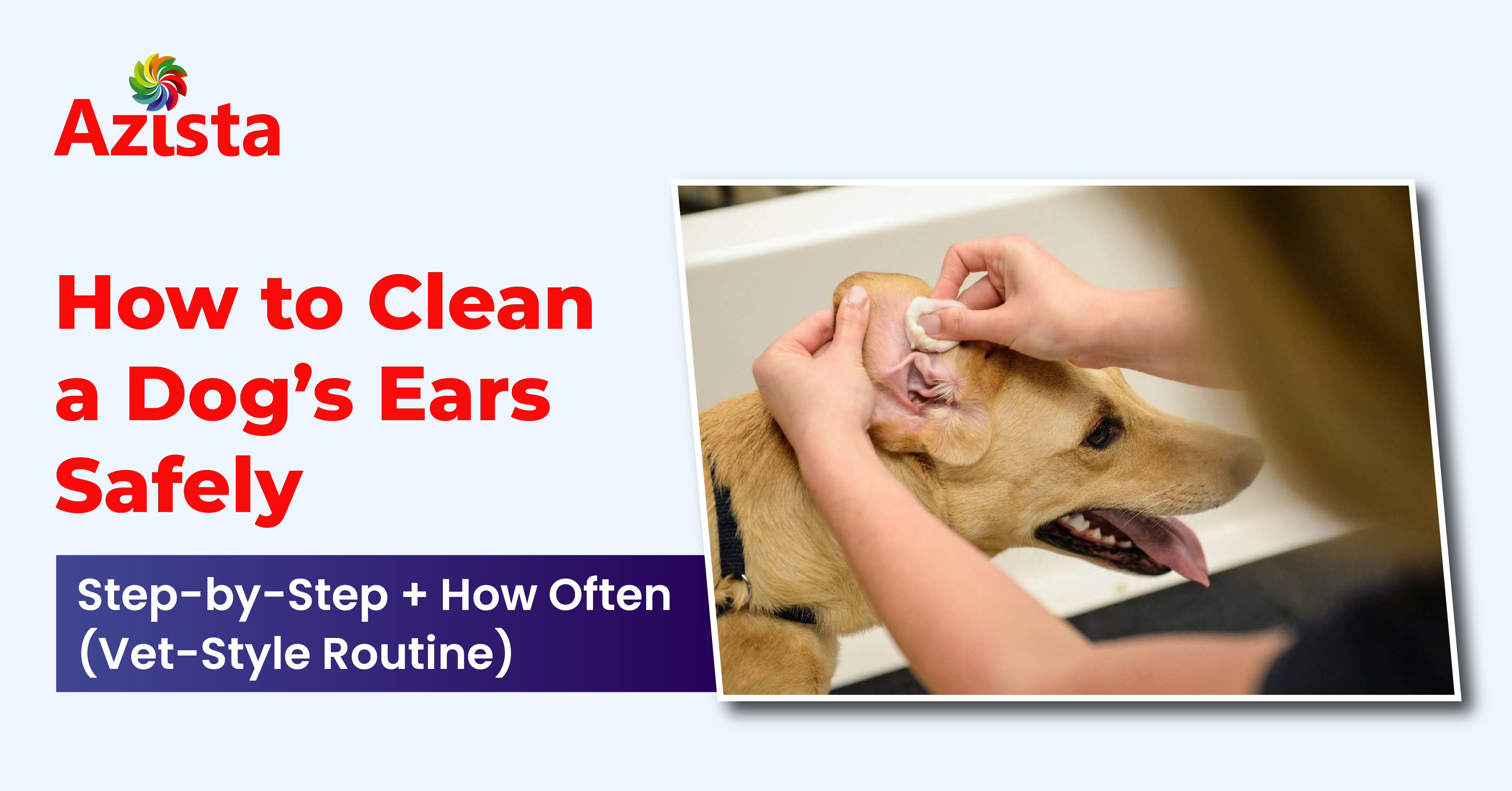
Wondering how to clean your dog's ears safely at home?
Proper ear care is essential to prevent infections, odour and discomfort - yet many pet owners either over-clean or avoid it altogether.
This guide explains dog ear cleaning steps, frequency, wax removal and a vet-style routine to keep your dog's ears healthy and irritation-free.
To clean a dog's ears safely, use a vet-approved ear cleaner, gently fill the ear canal, massage the base and wipe away debris with cotton.
Clean every 1-2 weeks for most dogs or as advised by a vet and avoid inserting objects deep into the ear.
Why Ear Care Matters for Dogs
Dogs are prone to ear issues due to:
- Moisture build-up
- Wax accumulation
- Bacterial or yeast growth
Signs your dog may need ear cleaning
- Ear odour
- Visible wax or dirt
- Frequent scratching or head shaking
- Redness or irritation
Regular ear care helps prevent infections and discomfort.
Dog Ear Cleaning Steps (Vet-Style Routine)
Step 1 - Choose the Right Ear Cleaner
- Use a vet-recommended dog ear cleaner
- Avoid alcohol or harsh chemicals
Step 2 - Prepare Your Dog
- Keep your dog calm and comfortable
- Choose a quiet environment
- Have cotton or gauze ready
Step 3 - Apply the Ear Cleaner
- Gently lift the ear flap
- Squeeze cleaner into the ear canal (as directed)
Step 4 - Massage the Ear Base
- Massage gently for 20 - 30 seconds
- You may hear a squishing sound (normal)
Step 5 - Let Your Dog Shake
- Allow your dog to shake their head
- This helps loosen debris
Step 6 - Wipe Away Wax and Dirt
- Use cotton or gauze
- Clean only the visible outer area
- Do not insert anything deep into the ear canal
Dog Ear Wax Removal - What You Should Know
Normal vs excessive wax
- Light brown wax ? normal
- Dark, thick or smelly wax ? may indicate infection
Important
Never use cotton buds inside the ear - they can push debris deeper and cause injury.
How Often Should You Clean Your Dog's Ears?
General guidelines
- Healthy dogs: Every 1-2 weeks
- Dogs prone to infections: Weekly (or as advised)
- After bathing/swimming: Clean to remove moisture
Dog Ear Cleaning After Bath
Moisture trapped in ears can lead to infections.
Tips
- Gently dry ears after bathing
- Clean if you notice water or debris
- Avoid over-cleaning
Dog Ear Odour Prevention
Simple prevention tips
- Maintain regular cleaning routine
- Keep ears dry
- Check ears weekly
- Use vet-approved products
How Ear Cleaners Work
Mechanism (high-level)
- Break down wax and debris
- Balance ear pH
- Reduce bacterial and yeast growth
This helps maintain a healthy ear environment.
Common User Questions
Can I clean my dog's ears at home?
Yes, with proper technique and vet-approved products.
What if my dog resists ear cleaning?
Go slowly, use positive reinforcement and avoid force.
Is frequent cleaning harmful?
Yes, over-cleaning can irritate the ear and disrupt natural balance.
Safety and Usage Overview
- Never insert objects deep into the ear
- Avoid harsh chemicals
- Stop if your dog shows pain
- Seek veterinary advice if needed
Disclaimer: This content is for educational purposes only and does not replace veterinary advice.
FAQ's
1. How often should I clean my dog's ears?
Typically every 1-2 weeks, depending on breed and ear health.
2. What is the safest way to remove dog ear wax?
Use a vet-approved cleaner and wipe gently with cotton.
3. Can I use water to clean my dog's ears?
No, specialised ear cleaners are safer and more effective.
4. Why do my dog's ears smell bad?
Odour may indicate infection or wax build-up consult a vet if persistent.
5. Should I clean my dog's ears after every bath?
Only if moisture or debris is present avoid unnecessary cleaning.
Key Takeaways
- Regular ear cleaning prevents infections
- Follow a gentle, step-by-step routine
- Avoid inserting objects into the ear canal
- Clean every 1-2 weeks or as needed
- Monitor for signs of infection
Conclusion
Keeping your dog's ears clean is a simple yet essential part of their overall health.
By following a safe, vet-style routine and maintaining the right cleaning frequency, you can prevent common issues like wax build-up, odour and infections.
If you notice persistent symptoms or need expert guidance, consulting professionals at Azista Vet can help ensure your pet receives the right care and support for long-term ear health.